Thursday, 14 September 2023

Common Straight Swift

Common Straight Swift (Parnara guttata,  直纹稻弄蝶). 

No doubt their larva are a pest for rice farmers. In late summer they emerge from the grasslands and can be found in presentable numbers in the bushes by Xiang river (湘江) as well as flower beds in parks and private spaces. I have also seen them in the flowers at the top of Yuelu Mountain (嶽麓山), but never yet at lower forested elevations. 2nd picture added 13 October 2023.

Common Straight Swift in Changsha

Common Straight Swift

Common Straight Swift in October

To Melancholy.

Charlotte Smith (1749-1806)
SONNET XXXII. To Melancholy.
Written on the Banks of the Arun, October, 1785.

WHEN latest Autumn spreads her evening veil
And the gray mists from these dim waves arise,
I love to listen to the hollow sighs,
Thro' the half leafless wood that breathes the gale.
For at such hours the shadowy phantom, pale,
Oft seems to fleet before the poet's eyes;
Strange sounds are heard, and mournful melodies,
As of night wand'rers, who their woes bewail!
Here, by his native stream, at such an hour,
Pity's own Otway, I methinks could meet,
And hear his deep sighs swell the sadden'd wind!
Oh Melancholy! — such thy magic power,
That to the soul these dreams are often sweet,
    And soothe the pensive visionary mind!

Wednesday, 13 September 2023

Juvenile Eurasian Tree Sparrow

Late summer is still full of mating insects and young birds. This juvenile eurasian tree sparrow (Passer montanus 麻雀) was drinking at the stream near my college. It does not matter whether they are perched on rocks or trees, or foraging in the grass or fallen leaves or soil, they seem an elemental part of the scenery, like bustling little nature spirits.

Juvenile Eurasian Tree Sparrow

Comedy and Hostility

Howard Jacobson, ‘Have You Heard the One About Auschwitz?’, Standpoint (June 2013):

Take on tears and tragedy and you meet no resistance; take on laughter and comedy and you walk into a steepling wall of hostility. The very enterprise sets up false expectations, the silliest being that if you write about comedy you must play the comedian yourself. Which is closely followed by the philistine objection that comedy, alone of everything else we do and think, must not be subjected to critical thought. Intellection kills the joke, it’s argued, as though, like some arcane ritual, comedy loses its divine mystery in the presence of philosophy or criticism. And this is before we get on to disagreeing about what is or isn’t funny. Certainly, what you find hilarious your neighbour won’t. And not only won’t he find it funny, he will be angered by it, for offence attaches to the very ambition to amuse. We are indifferent to tears that don’t flow. Maybe next time. But for laughter that lies stillborn in our belly we cannot ever forgive the father. Whoever goes out on a limb, therefore, declaring for this comedian or comic writer or another, risks a double-wrath — for being too much the intellectual in support of comedy that isn’t comic and for spoiling that which has no value anyway. Good luck with that.

Notes:
The article is archived here.

Tuesday, 12 September 2023

Juvenile Crested Myna

Crested myna (Acridotheres cristatellus, 八哥).

It is a very common Changsha songbird. In the summer, when most other small birds have retreated to the shade they are often conspicuously around, young and old, searching for insects in the grass. All are good singers and these juveniles in particular are great devourers of flies.
Juvenile Crested Myna

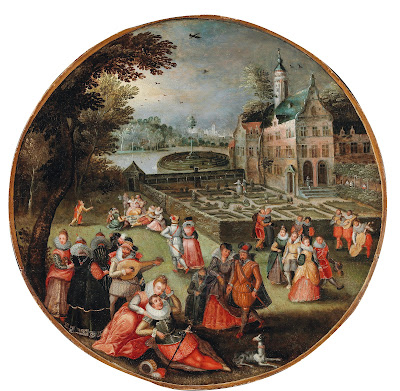
Gardens In Utopia

St Thomas More (1478-1535), Utopia, ed. & trans. by Edward Surtz, S.J. & J.H. Hexter. (New Haven: Yale University Press, 1965; first pub. 1516 [The Complete Works of St. Thomas More, Volume 4]), p. 120; p. 121:

Hos hortos magnifaciunt. in his uineas, fructus, herbas, flores habent. tanto nitore, cultuque, ut nihil fructuosius usquam uiderim, nihil elegantius. qua in re studium eorum, non ipsa uoluptas modo, sed uicorum quoque inuicem de suo cuiusque horti cultu certamen accendit. & certe modo aliud quicquam temere urbe tota reperias, siue ad usum ciuium, siue ad uoluptatem commodius. eoque nullius rei, quam huiusmodi hortorum, maiorem habuisse curam uidetur in qui condidit.
 
The Utopians are very fond of their gardens. In them they have vines, fruits, herbs, flowers, so well kept and flourishing that I never saw anything more fruitful and more tasteful anywhere. Their zest in keeping them is increased not merely by the pleasure afforded them but by the keen competition between blocks as to which will have the best kept garden. Certainly you cannot readily find anything in the whole city more productive of profit and pleasure to the citizens. There is nothing which their founder seems to have cared so much for as these gardens.
Jakob Grimmer  - Allegory of Spring

Monday, 11 September 2023

Fledgling White Wagtail

In past weeks the mudflats in the Xiang river were radiating heat, so that walking about has been a bit like exploring the inside of a slippery clay oven. The serotinal sun is still at strong but for whatever reason the fluvial sediments have cooled, and so more birds have come to bath and and to forage. This fledgling white wagtail (motacilla alba, 白鹡鸰) was doing both one early afternoon.

Fledgling White Wagtail

Long Books

Hugh Trevor-Roper (1914-2003), Letters from Oxford: Hugh Trevor-Roper to Bernard Berenson, ed. by Richard Davenport-Hines (London: Phoenix, 2007), p. 65 [4 May 1951]:

I, unlike you, prefer my books to be long (though this may be a sign of laziness: it spares one the mental effort of repeated choice); and I am now re-reading, for the nth time, that greatest of all historians, as I continually find myself declaring, - Gibbon. What a splendid writer he is! If only historians could write like him now! How has the art of footnotes altogether perished and the gift of irony disappeared!

C.S. Lewis (1898-1963), On Stories and Other Essays on Literature, ed. by Walter Hooper (San Diego: Harcourt, 1982), p. ix:

 ‘You can’t get a cup of tea large enough or a book long enough to suit me [...]’

Sunday, 10 September 2023

Oriental Magpie

Oriental magpie (Pica serica, 普通喜鵲).

Found throughout Changsha and they largish for magpies and bearers of good luck. They are vibrantly blue, black and white, but if one sees them right light, their remiges have a beautiful purple iridescence.

Oriental Magpie at Yanghu Wetland
Oriental Magpie at Xianjia Lake


Adam and Eve

Samuel Butler, The Note-Books of Samuel Butler, ed. by Henry Festing Jones (London: Jonathan Cape, 1930), p. 243:

A little boy and a little girl were looking at a picture of Adam and Eve.
“Which is Adam and which is Eve?” said one.
“I do not know,” said the other, “but I could tell if they had their clothes on.”

Jan Brueghel the Elder - The Garden of Eden with the Fall of Man


Jan Brueghel the Elder (1568–1625) / Peter Paul Rubens  (1577–1640), The Garden of Eden with the Fall of Man (Mauritshuis)

Saturday, 9 September 2023

White Morph Amur Paradise Flycatcher

Amur paradise flycatcher, (Terpsiphone incei, 寿带鸟). Male. White Morph.

I spot them occasionally in the parks of Changsha, though they are usually timorous and stay high in the dark tree canopies. One summer day was cooler than most others this season, so I went out to see who was more active in the nearby forests. Many birds and insects were less dormant. This male, in white plumage, was only visible for one moment, but that is one moment longer than I have seen one for the past few years. I don't except to see another this fall season, but perhaps I will see one again next year, or the year after.

Amur Paradise Flycatcher

Contemplating an Empty Universe

From George Berkeley’s (1685-1753) Commonplace Book, in The Works of George Berkeley D.D., Formerly Bishop of Cloyne: Including His Posthumous Works, 4 vols (Oxford: Clarendon Press, 1871), I, p. 59:

’Tis wondrous to contemplate ye World empty’d of all intelligences.

Friday, 8 September 2023

Forgetfulness

John Gower (c. 1330-1408), The Complete Works of John Gower, 4 vols, ed. by G.C. Macaulay (Oxford: Clarendon Press, 1899-1902), vol. II (1901), p. 317 [Confessio Amantis, IV.573-87]:

For as a man that sodeinli
A gost behelde, so fare I;
So that for feere I can noght gete
Mi witt, bot I miself foryete,
That I wot never what I am,
Ne whider I schal, ne whenne I cam,
Bot muse as he that were amased.
Lich to the bok in which is rased
The lettre, and mai nothing be rad,
So ben my wittes overlad,
That what as evere I thoghte have spoken,
It is out fro myn herte stoken,
And stonde, as who seith, doumb and def,
That all nys worth an yvy lef,
Of that I wende wel have seid.

Leptogenys Kitteli

They are inactive at night, but during the day these army ants (leptogenys kitteli, 基氏细猛蚁) scour every part of Yuelu Mountain (嶽麓山). Individual ants wander about like itinerant warriors. When seen in groups they are almost always dragging worms, grasshoppers or other spoils back into their own abodes, which are often makeshift and temporary nests, precariously put together under debris and old leaves. There is something inappropriate and anthropomorphic about referring to an ant as 'aggressive', but the term is often applied to them because they move quickly and are efficient at finding food.

Leptogenys kitteli